The famous Wombwell lion
A former tour guide at London’s famous Highgate Cemetery has made a superb short film about symbolism in Victorian cemeteries which is featured on YouTube and may be seen at the link below.
The famous Wombwell lion
A former tour guide at London’s famous Highgate Cemetery has made a superb short film about symbolism in Victorian cemeteries which is featured on YouTube and may be seen at the link below.
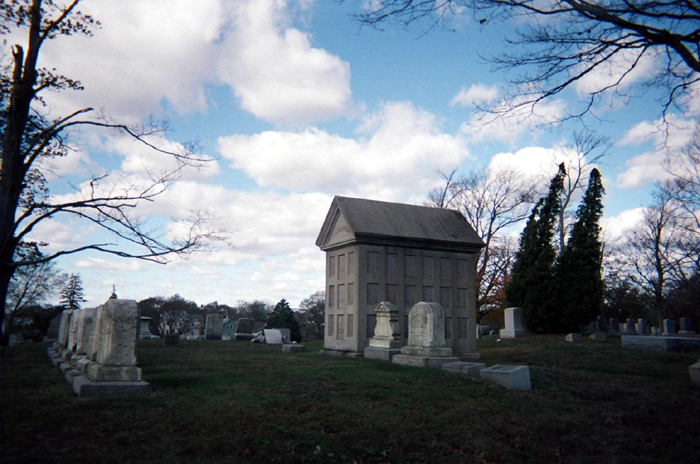
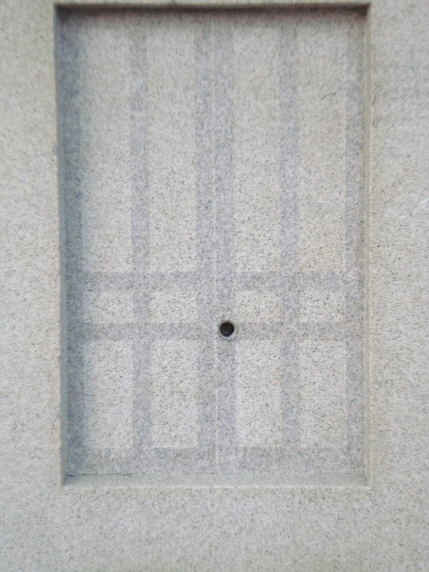
Perhaps the most unusual monument in the cemetery is this 9 x 7 1/2 x 4 granite miniature mill which serves as a lasting memorial to mill owner F.H. Stafford The windows are reproduced in faithful detail as well as the doors on each storey which were needed for loading. The doors even boast minutely executed keyholes!
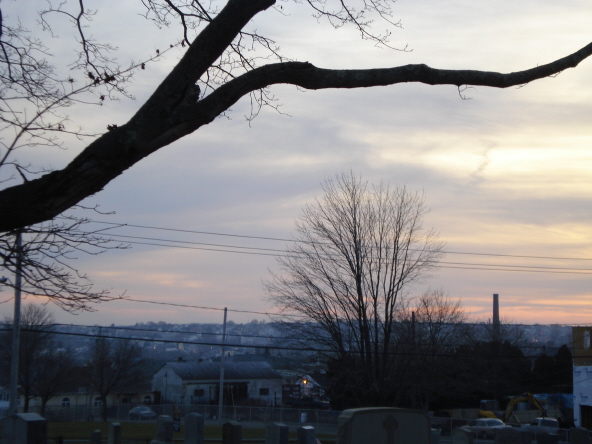
It was the wish of Mr. Stafford to erect this lasting tribute to his life’s work, and it was erected shortly after his death in 1892. The site was well-chosen as it is located upon a high hill section of the cemetery which overlooks the many smokestacks of the southeastern part of the city.
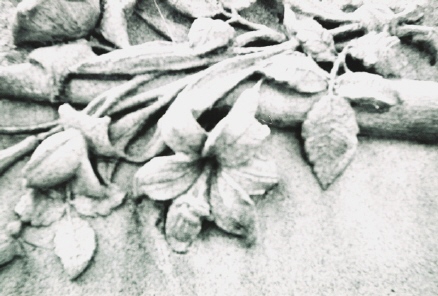
An Oak Grove granite lily
Perhaps there is no one flower more associated with mourning, funerals or grave stones than the lily. Madonna lily, calla lily. or other varieties, with their bell- shaped blossoms and heavy perfume were a favorite of Victorian mourners at the wake, on the grave and carved on stones for the female Departed. Oak Grove has a veritable field of beautiful carved granite and marble lilies. In an excellent description from the web site The Art of Mourning, the meaning behind the symbol is explained.
“Lily: Majesty, innocence, purity, and resurrection. Often associated with the Virgin Mary and resurrection. Often used on women’s graves. The use of lilies at funerals symbolizes the restored innocence of the soul at death.”
For other interpretations of Victorian plant symbolism, visit http://www.artofmourning.com/symbolism.html#plants
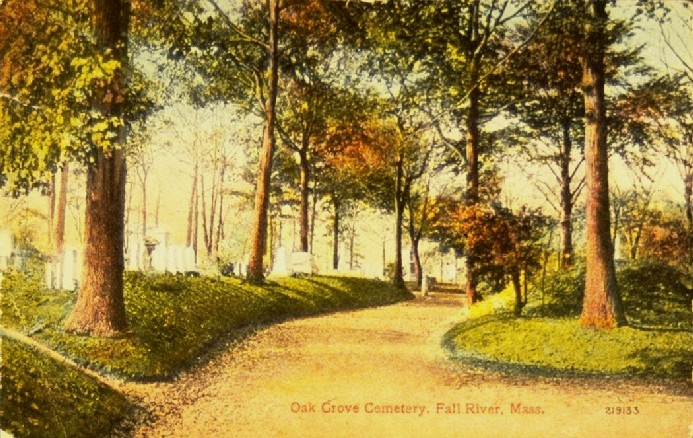
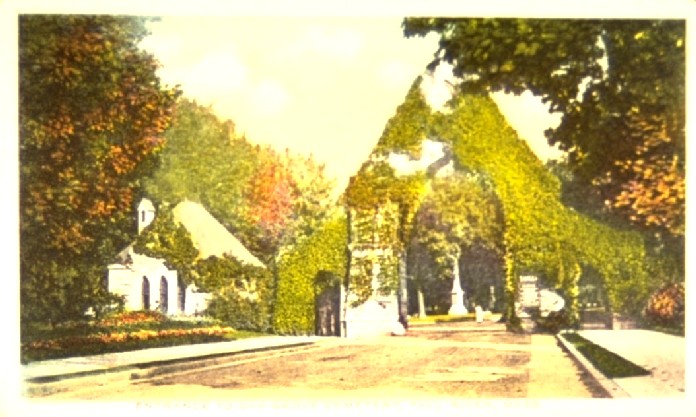
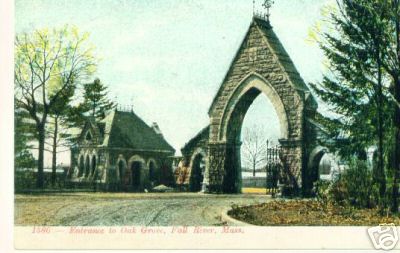
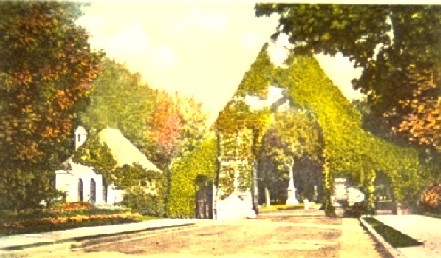
Postcards of famous resorts and exotic places are still available, but the period from 1900-1915 must surely mark the period when every little town or village was photographed as the subject for a penny postcard. Libraries, hospitals, landmarks, impressive buildings, homes of notable citizens, and even simple street scenes were all fodder for the camera. Millions of these little epistles were sent all over the country by visiting friends and relatives, some bedecked with glitter, some embossed and gilded, but most just plain scenes of faraway places to be shared with the folks back home. A few postcards of Oak Grove’s famous entry arch exist with the words, “The Shadows Have Fallen and They Wait for the Day”. The early cards show the gate without the clinging ivy. Oak Grove postcards are easily found in antique stores and on Ebay in the $4-$8 price range and are wonderful collectibles.
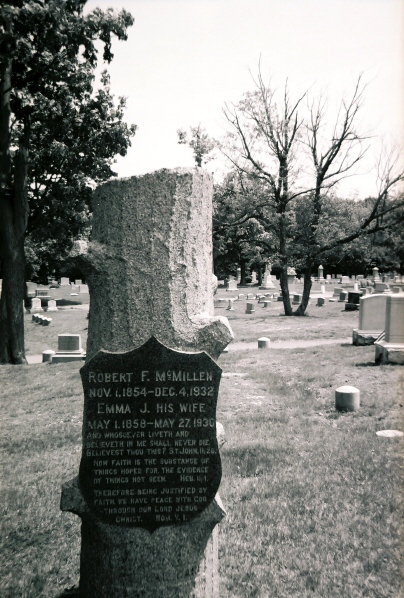
The popular styles which affected home decor and fashion also followed on to the final purchase- a gravestone. At the end of the nineteenth century, many influences were at work to counter the previous generation of old Victorian tastes. The Aesthetic Movement was afoot in England and Europe with its high regard for the hand made, natural, and back-to-Nature motifs of trees, flowers, and other flora and fauna. The famous Swiss and German Black Forest and rustic hunting lodge influence was spotted in furnishings for the home- shelves and picture frames laden with carved walnut leaves and stag heads, antlers, rough bark and “twig” effects. Art Nouveau (1880-1914) was sweeping the globe as well with fluid natural lines, sensuous curves, flowers and whimsical motifs.
Monuments in Oak Grove reflect all of these trends, and especially noteworthy is the symbolic motif of the tree, twig, or tree cut off short, reflecting a life cut off in its prime. Particularly interesting is the enormous life-sized tree marker of Cook Borden, a relative of Lizzie Borden, who had, by coincidence, a lumber yard business in Fall River. It is hard to know if the tree was purchased for that reason, or because it was stylish-but it remains one of the most fascinating memorial tributes in Oak Grove.


So many visitors come to call upon the Bordens that cemetery staff finally had to mark the way from the main gate by spraypainting black arrows on the ground. No matter what time of year one visits, there is always a flower, coin, note, or some remembrance on Lizzie’s grave. William Almy, Andrew Borden’s business partner and friend is interred nearby. Over time, many feet have worn a well-trod path to the old oak tree which watches over the infamous family.

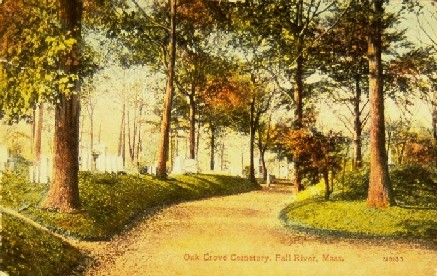
The concept of a beautifully -landscaped park where families might come to visit departed Loved Ones was first fully-realized in London’s Highgate and Cambridge’s Mount Auburn. The Victorians rivalled the Ancient Egyptians in their ritual observances of death and burial, monuments and memorials. Beautiful Oak Grove Cemetery in the North end of Fall River is one of many New England mid- century Victorian memorial parks where the streets are named for trees, and fanciful wrought iron gates enclose the fine families of the city like fences of stately homes in the earthly life.
For those who love cemeteries, – the peacefulness and quiet of the Past- Oak Grove holds unparalleled verdant vistas and peerless carved monuments of another age. Whether a student of Victorian symbolism , or of Fall River history- a pensive hour spent in silence at Oak Grove is a retreat from the pressures of modern society, and a glimpse into the intriguing past of the city’s notable citizens.
Plagued with the problems all cemeteries are faced with today, vandalism, landscaping and maintenance costs, security, lack of volunteerism, etc. -perhaps now is the time for those who truly appreciate the heritage and history enclosed within the gates and walls of Oak Grove to come together.
 Friends of Oak Grove Cemetery