The Harvest of Years

wheat21.jpg

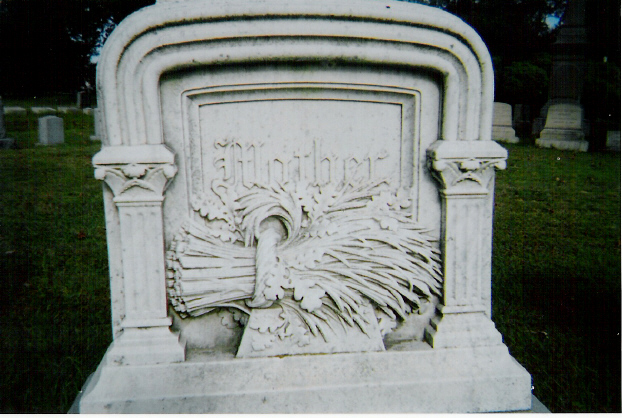
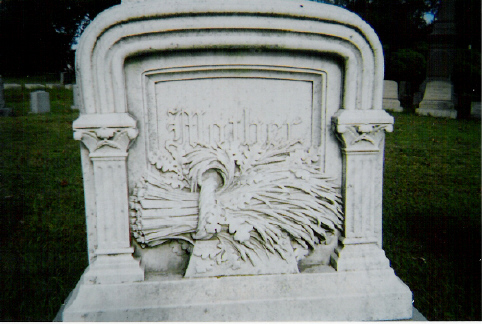
Another symbol which was particularly popular on headstones of men who had lived a long span of 70 or more years was the sheaf of wheat.  There are several excellent examples carved in very high relief to be found at Oak Grove. The symbolism of gathering in the harvest of years parallels the familiar figure of Death, with his scythe, preparing to reap the harvest at Life’s end. 

 srreaper4.jpg Gustave Dore’s Grim Reaper

 Occasionally one sees a single blade of wheat, millet, oats, or another cereal grain.

wheat.jpg

Images in Black and White

weisse_rose.jpg Oak Grove may well be one of the best places in the state to find examples of Victorian funeral symbolism, which was a language understood by all who passed through the cemetery in the nineteenth century. The Language of Flowers had long been a part of Victorian sentiment, and this transfered to the grave as well. Ladies often received floral tributes in stone of roses, ivy, fern and lilies signfying hope for the resurrection of the body on the Day of Judgement, love, humility and sincerity (fern) and the clinging ivy (undying affection). Other symbols shown in the black and white slide presentation below are:
Olive branch– peace , Oak leaves– strength, fidelity, endurance, Palm- victory, triumph over death, Laurel wreath– victory, eternity, immortality, Anchor– hope or a career on the sea, Scroll or Book– Book of Life, scroll of St. Peter, Roll of the Saved, Doorway or Arch– portal between heaven and earth, Urn– harking back to Egyptian canopic jars, containers of the Spirit, Curtain– the end of the worldly life, Wreaths, Swags and Garlands– victory over death, immortal circle, honor, Lamb– grave of an infant or child.

All of the black and white photographs were taken with an inexpensive disposable camera using Kodac black and white film. Although it is pleasant to walk in cemeteries on sunny days, some of the best photographs are obtained on overcast days when shadows and bright sun do not interfer with capturing the sculptural detail in dark bas-relief. Keep a disposable camera camera handy in the glove compartment, for you never know when you may wish to capture an image of a particularly remarkable monument.

[slideshow id=576460752330284866&w=600&h=475]
F. H. Stafford- You CAN take it with you!

stafford.jpg

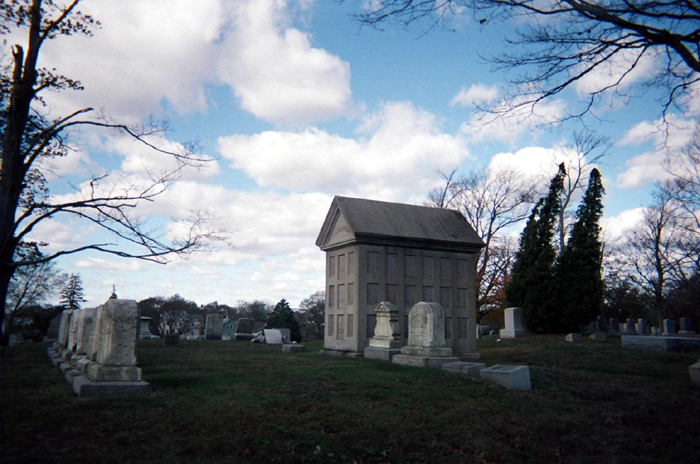
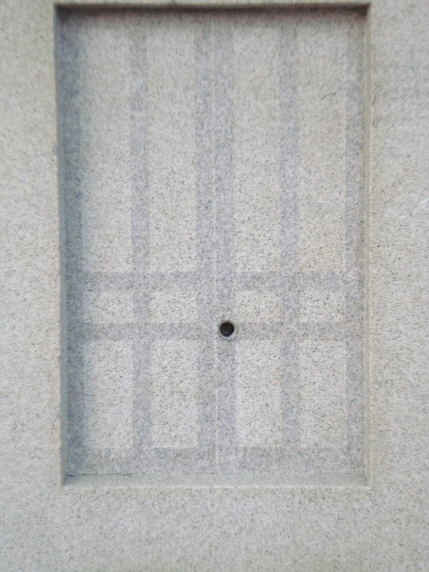
Perhaps the most unusual monument in the cemetery is this 9 x 7 1/2 x 4 granite miniature mill which serves as a lasting memorial to mill owner F.H. Stafford The windows are reproduced in faithful detail as well as the doors on each storey which were needed for loading.  The doors even boast minutely executed keyholes!

stafforddoor.jpg 

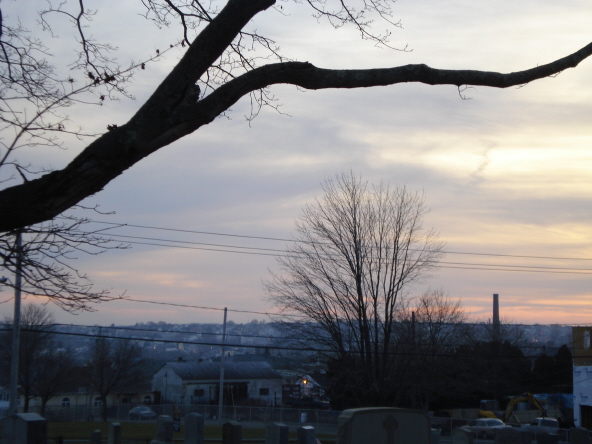
  It was the wish of Mr. Stafford to erect this lasting tribute to his life’s work, and it was erected shortly after his death in 1892. The site was well-chosen as it is located upon a high hill section of the cemetery which overlooks the many smokestacks of the southeastern part of the city.

staffordview.jpg

Aesthetic and Black Forest influences

 treestone.jpg

The popular styles which affected home decor and fashion also followed on to the final purchase- a gravestone.  At the end of the nineteenth century, many influences were at work to counter the previous generation of old Victorian tastes.  The Aesthetic Movement was afoot in England and Europe with its high regard for the hand made, natural, and back-to-Nature motifs of trees, flowers, and other flora and fauna.  The famous Swiss and German Black Forest and rustic hunting lodge influence was spotted in furnishings for the home- shelves and picture frames laden with carved walnut leaves and stag heads, antlers, rough bark and “twig” effects.  Art Nouveau (1880-1914) was sweeping the globe as well with fluid natural lines, sensuous curves, flowers and whimsical motifs. 

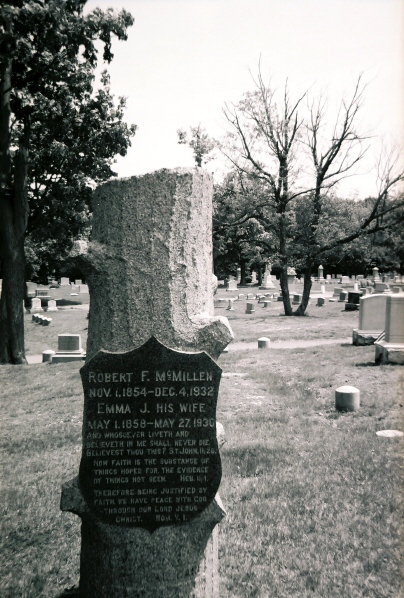
Monuments in Oak Grove reflect all of these trends, and especially noteworthy is the symbolic motif of the tree, twig, or tree cut off short, reflecting a life cut off in its prime. Particularly interesting is the enormous life-sized tree marker of Cook Borden, a relative of Lizzie Borden, who had, by coincidence, a lumber yard business in Fall River.  It is hard to know if the tree was purchased for that reason, or because it was stylish-but it remains one of the most fascinating memorial tributes in Oak Grove.

cooketreecloseup.jpg

felledtreestone.jpg

twigaestheticmov.jpg


A Victorian Memorial Park

 oakgrovelady.jpg

The concept of a beautifully -landscaped park where families might come to visit departed Loved Ones was first fully-realized in London’s Highgate and Cambridge’s Mount Auburn. The Victorians rivalled the Ancient Egyptians in their ritual observances of death and burial, monuments and memorials.  Beautiful Oak Grove Cemetery in the North end of Fall River is one of many New England mid- century Victorian memorial  parks where the streets are named for trees, and fanciful wrought iron gates enclose the fine families of the city like fences of stately homes in the earthly life.  

For those who love cemeteries,  – the peacefulness and quiet of the Past- Oak Grove holds unparalleled verdant vistas and peerless carved monuments of another age.  Whether a student of Victorian symbolism , or of Fall River history- a pensive hour spent in silence at Oak Grove is a retreat from the pressures of modern society, and a glimpse into the intriguing past of the city’s notable citizens.

Plagued with the problems all cemeteries are faced with today, vandalism, landscaping and maintenance costs, security, lack of volunteerism, etc. -perhaps now is the time for those who truly appreciate the heritage and history enclosed within the gates and walls of Oak Grove to come together.