Zinc Monuments

One type of monument especially popular from the Civil War through 1900 is the white bronze or zinc monument.   White bronze is a misnomer, for the monument is not made of bronze, but rather zinc or more rarely, iron.  The final patina is whitish to pale blue to darker blue, and the great benefit of this type of monument is that the embossed metal panels and ornaments hold epitaphs and images in sharp relief for a very long time. They seem to take the weather, moss and lichen growth and acid rain exceptionally well.  The only drawback is that attached elements, such as a top urn, can be easily snapped off, and seams, especially at the base, can separate.  With the proper method of repair, however, this is not much of a problem, but trouble results when concrete is used as a filler.  The zinc monument offers a good crisp image for monument rubbing using rice paper and soft heelball wax. For more information on zinc monuments, visit these two links below.  Oak Grove has many beautiful examples of this monument type.

http://www.si.edu/mci/english/research/conservation/zinc_sculptures.html

http://www.tngenweb.org/darkside/white.html

Mausolea

n. pl. mau·so·le·ums or mau·so·le·a 1. A large stately tomb or a building housing such a tomb or several tombs. 
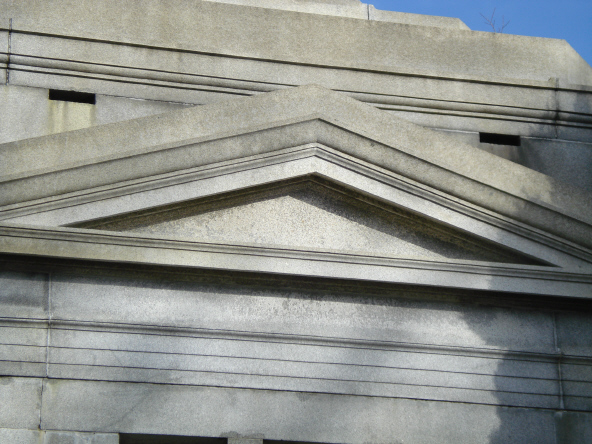
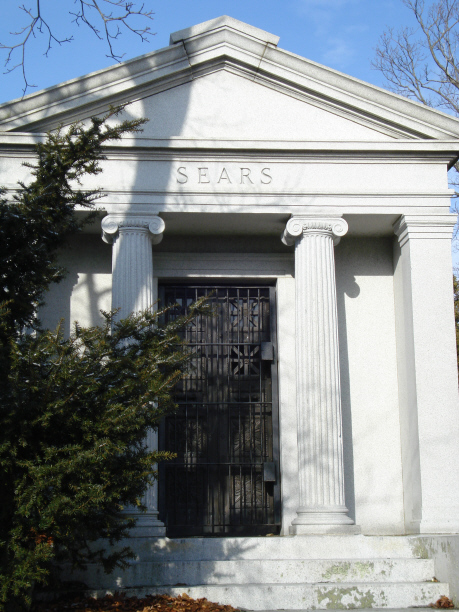
There are three mausolea built in the favored classical Grecian style at Oak Grove and one in a distinctly Gothic Revival mode. 
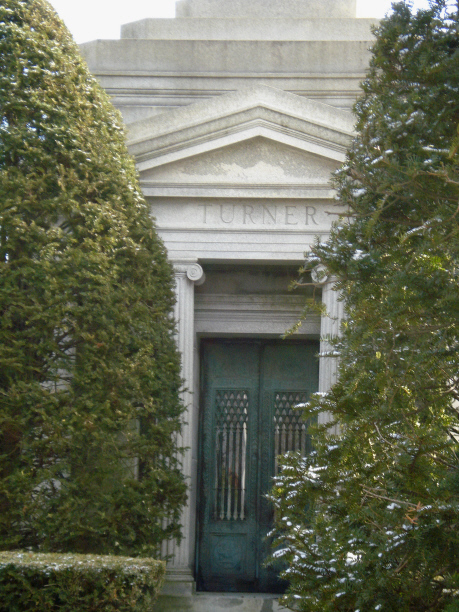
 The Turner Mausoleum can be found near the main entry , slightly to the center behind the Civil War obelisk and cannon memorial.
 
  
turner.jpg
 
(west facade)
 
Typical triangular pediment (south facade)


turner2.jpg
 The Sears and Charlton Mausolea are quite close together in the south end.
 
mausolea.jpg
 Earle Perry Charlton became a Vice President of Woolworth’s dimestore chain, a position he held until his death in 1930.  Charlton Hospital, just down the street from Oak Grove is named in his honor.  Mr. Charlton was a great  philanthropist and benefactor to the city.
  
charlton.jpg
sears.jpg
 The Gothic Revival Mausoleum


gothic.jpg

Symbolism in Stone

scrollanddove.jpg

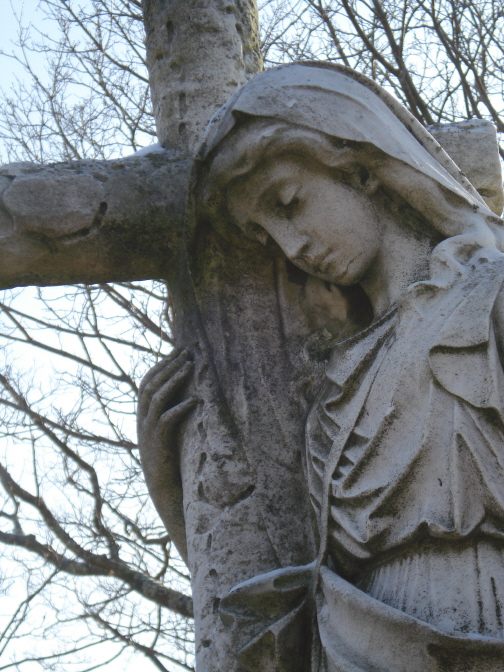
Oak Grove is a non-denominational city cemetery. The majority of burials here could be classified as Protestant-affiliated. Saint Patrick’s cemetery in the north end of the city as well as several Roman Catholic church cemeteries within the city contain the remains of most of the city’s Catholic population. So it is not surprising that saints, angels and crosses are very few within the walls of Oak Grove. Tablet-shaped stones and obelisks are the favored shapes to be found, even among the stones from the 1855-1900.
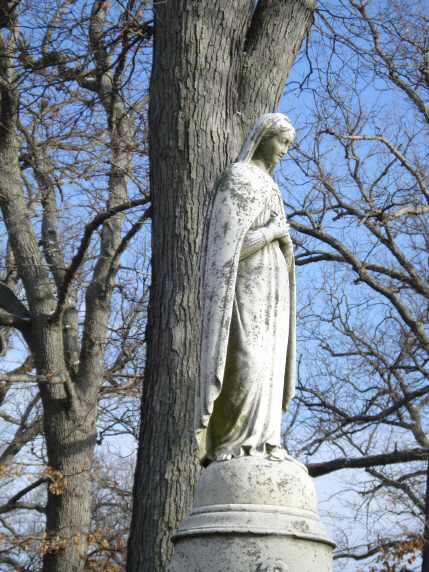
madonna.jpg

The only figural madonna at Oak Grove

Granite, marble and the very durable metallic monuments compose the majority of markers. The great beauty of Oak Grove lies in the landscaping of the grounds and the intricate carvings and symbolism on many of the older stones. Although there are sections of contemporary, fairly nondescript markers in the northeast end, the great majority of grave markers in this cemetery are from the golden age of monument carving when hand tools were used and artistry and pride of workmanship were the key elements of the craft. The Fall River area was famous for granite, especially pink granite, and this ready resource is much-evident in use.  The slide presentation above contains many of the symbols associated with fraternal orders and particular Victorian sentiments and virtues.

Anchor- Steadfastness, Hope, a maritime career

Bellflower-Constancy and gratitude

Calla lily- Majesty, Beauty, Marriage

Daisy- Innocence, grave of young child, the “day’s eye”

Fern- Frankness, Humility, Sincerity

Laurel (wreath) Victory, Immortality, Eternity

Lily of the Valley- Innocence, Purity, one of the first Spring flowers

Lyre- References a harp, heaven, angelic music, occasionally used on the grave of a poet.

Madonna Lily- Purity

Rose- Univeral symbol of Love, queen of flowers, used most often on graves of women

Wheat or wheat sheaf- Long life, the reaping of years, productive and abundant

Oak leaves- Strength, Endurance, Faith and Virtue

Open Book- Book of Life, List of St. Peter, life of the deceased as an open book, a pure  life

Tree or log stones- These could be ordered from Sears and Roebuck catalogue, and were used for the Woodsmen fraternity as well as carpenters, builders, lumbermen, or to suggest by their height as short life cut off in its prime, head of the family, and occasionally contains a nest with birds suggesting children of the deceased.

Dove- Most popular animal seen in cemeteries, symbolizes Peace, Holy Spirit

Hands Clasping- An earthly farewell, a heavenly welcome or matrimony

Curtain, Drapery, Veil- Passing from one existence to another, an ending

Hourglass- Fleeting Time, Tempus Fugit, inevitability of earthly Death

Door, arch, gateway- Passing from one existence to the next

Ship- Seafaring life, a journey, or symbol for the Chirch universal with the mast as the cross

Torch-  Upside down position has the meaning of extinguished life.

Pine Tree- Evergreen, Eternal
The Funeral Card

funcard1.jpg


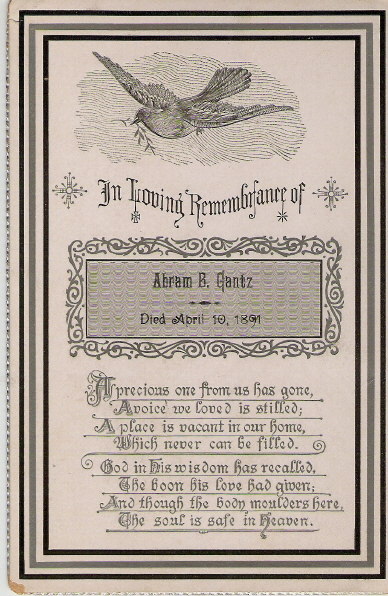
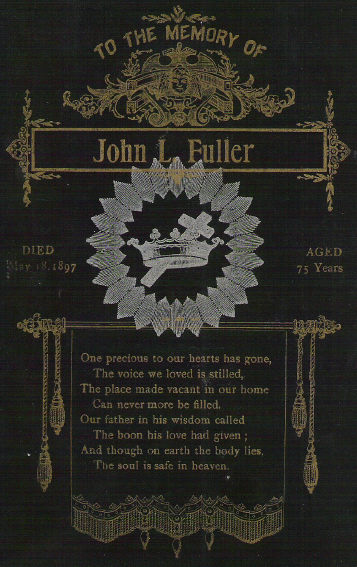
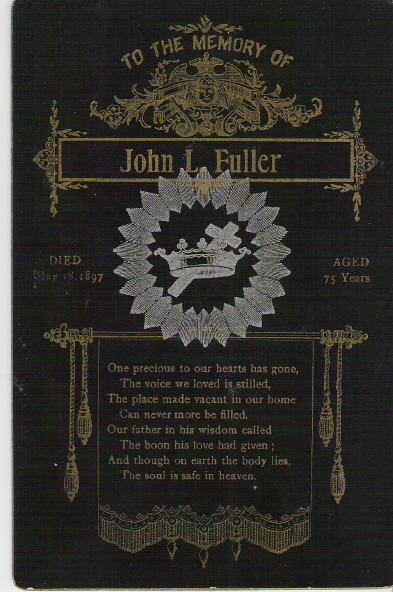
Victorians liked keepsakes of all kinds.  The idea of some sort of printed memorial which could be tucked into family Bibles, placed on mantels in the parlor, and kept for the future generations found great favor in the nineteenth century. The custom of funeral cards is still observed today although the size and intricacy of the funeral card has changed.  Today we often find the 23rd Psalm, the Lord’s Prayer, or a contemporary poem along with the deceased’s dates, name and age.  The Victorian and early twentieth century cards were on very heavy stock and featured the symbolism Victorians understood, such as the opening gate, cross and crown, dove of the spirit, laurel wreath etc.  Suitable mourning poetry was nearly always included below the name and dates of the departed Loved One. Early cards were generally in either black or white with gold or silver lettering.  (Examples from the blogger’s collection).


funcard21.jpg

funcard31.jpg

Postmortem Photography

Today’s culture is one of everlasting youth and denial of mortality. For us, postmortem photography may seem distasteful and unsettling.  The Victorians, however, were no strangers to death- and death among the very young was an every day occurence. 

The Victorian parlor became the memorial space to display mementoes of every single life, no matter how brief, and great love and care went into arranging the deceased as beautifully as could be done for these photographs.  Many appear to be merely sleeping peacefully. Photographs of children and infants were particularly heart-wrenching, as some grieving mothers tenderly held their little ones for the first and last time in these images. 

These cabinet photographs were framed and displayed on mantels and parlor tables throughout the years, just as if the images recorded there were still part of the family. Smaller portraits were given out to mourning family members to be worn in lockets, often with a curl of hair.  Hair jewelry became an art form of intricate workmanship by loving hands which has never seen an equal since the nineteenth century. 

The Dead were gone- but never forgotten in the hearts of their families.  Every life mattered very much, and its loss felt and remembered forever.

our-darling.jpg  “Our Darling”

Coffins and Caskets

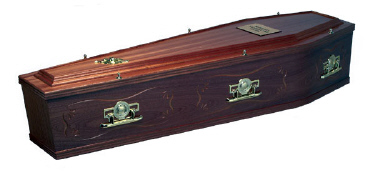
Although these two words are often used interchangeably, there is a difference between a coffin and a casket.  A proper coffin is wider at the shoulder and tapers toward the feet.  This was felt to be a prudent saving of costly wood as there was no need for width all the way to the bottom.  This style is still to be found in Europe today. Coffins were sometimes very simple pine boxes, unlined and unadorned. Fancier models were lined, had a coffin plate of brass or silver with the deceased’s name and dates and sometimes a sentiment such as “Our Darling” or “Beloved Wife”, and had three metal handles on each side for the six pallbearers to grasp on the way to the grave. Graves were sometimes lined with fir branches, and after the coffin was lowered, bricked over to discourage graverobbers or other disturbance.  It was not unusual for cabinet or furniture makers to do a brisk side trade in coffin making.

victorian-mahog.jpg

Lizzie Borden’s father, Andrew J. Borden, was a carpenter by training before branching out into farming and real estate, and although not a mortician, he did build coffins and was an “undertaker” in the sense of providing items needed for a funeral such as chairs, coffin stands, conveyance to the grave, and other incidentals. A newspaper article tells of Mr. Borden displaying a prominent Civil War casualty in the arcade window complete with bunting in the storefront  of the furniture business he owned with partner William Almy, so as more citizens could view the body and pay their repects in a time before the rise of the conventional funeral “parlor”. 

theophilus_blake_coffin_plate.jpg coffin plate

Embalming became a necessity in transporting Civil War dead from a distance back home again, but before those times, the dead were usually quickly buried and not embalmed.  For this reason, in their haste, errors were made and those in comas or showing signs of death were mistakenly buried alive.  Edgar Allan Poe wrote a story of this unsettling possibility in his 1850 story, The Premature Burial.  Many patented safety coffins were invented to prevent this by means of a bell rope tied to the hand of the buried person which would communicate with the living by means of a bell above the ground.  Sometimes a flag could be raised, or even explosives ignited by the unfortunate Undead.

Exhumations over the years have proven that premature burial did indeed take place, however the expressions “saved by the bell” and “dead ringer” do NOT come from this situation. “Saved by the bell” has its origins in the boxing ring, and “dead ringer” refers to substituting a look-alike for the genuine.

coffinbell_2.gif

A casket originally referred to a small chest for storing and carrying jewels or precious objects.  A casket is a rectangular container of the same width from top to bottom.  It is generally padded and lined, and goes into the ground after the grave has been lined with a vault. Today cemeteries still use concrete vaults or the new resin “grave liners” which also have sealed lids. Caskets usually open at the top so the head and shoulders of the deceased may be viewed at the wake, and have the customary three handles on each side for pallbearers.

For more information on Victorian safety coffins, click on the following link for an excellent article  http://www.americanartifacts.com/smma/life/life.htm

casket.jpg