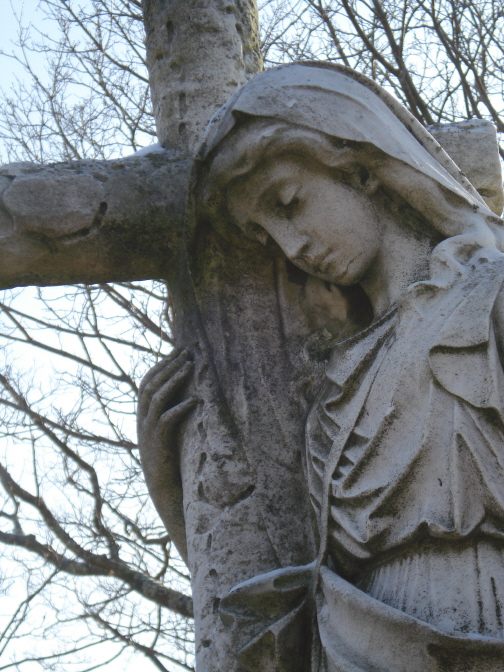
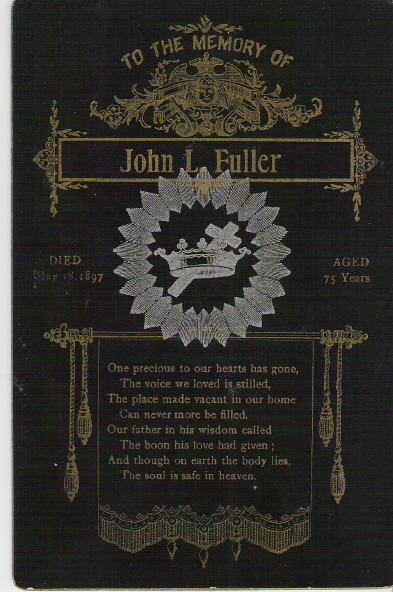
Oak Grove is a non-denominational city cemetery. The majority of burials here could be classified as Protestant-affiliated. Saint Patrick’s cemetery in the north end of the city as well as several Roman Catholic church cemeteries within the city contain the remains of most of the city’s Catholic population. So it is not surprising that saints, angels and crosses are very few within the walls of Oak Grove. Tablet-shaped stones and obelisks are the favored shapes to be found, even among the stones from the 1855-1900.
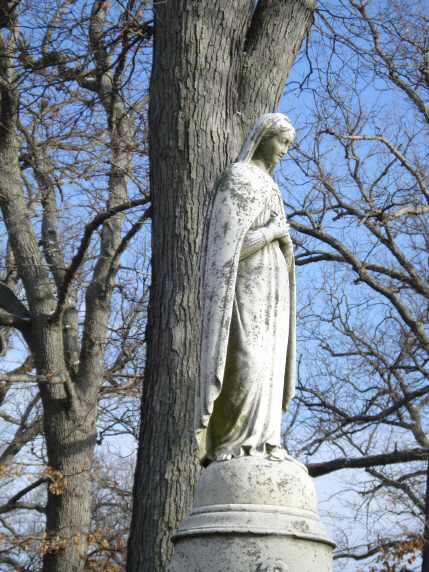
The only figural madonna at Oak Grove
Granite, marble and the very durable metallic monuments compose the majority of markers. The great beauty of Oak Grove lies in the landscaping of the grounds and the intricate carvings and symbolism on many of the older stones. Although there are sections of contemporary, fairly nondescript markers in the northeast end, the great majority of grave markers in this cemetery are from the golden age of monument carving when hand tools were used and artistry and pride of workmanship were the key elements of the craft. The Fall River area was famous for granite, especially pink granite, and this ready resource is much-evident in use. The slide presentation above contains many of the symbols associated with fraternal orders and particular Victorian sentiments and virtues.
Anchor- Steadfastness, Hope, a maritime career
Bellflower-Constancy and gratitude
Calla lily- Majesty, Beauty, Marriage
Daisy- Innocence, grave of young child, the “day’s eye”
Fern- Frankness, Humility, Sincerity
Laurel (wreath) Victory, Immortality, Eternity
Lily of the Valley- Innocence, Purity, one of the first Spring flowers
Lyre- References a harp, heaven, angelic music, occasionally used on the grave of a poet.
Madonna Lily- Purity
Rose- Univeral symbol of Love, queen of flowers, used most often on graves of women
Wheat or wheat sheaf- Long life, the reaping of years, productive and abundant
Oak leaves- Strength, Endurance, Faith and Virtue
Open Book- Book of Life, List of St. Peter, life of the deceased as an open book, a pure life
Tree or log stones- These could be ordered from Sears and Roebuck catalogue, and were used for the Woodsmen fraternity as well as carpenters, builders, lumbermen, or to suggest by their height as short life cut off in its prime, head of the family, and occasionally contains a nest with birds suggesting children of the deceased.
Dove- Most popular animal seen in cemeteries, symbolizes Peace, Holy Spirit
Hands Clasping- An earthly farewell, a heavenly welcome or matrimony
Curtain, Drapery, Veil- Passing from one existence to another, an ending
Hourglass- Fleeting Time, Tempus Fugit, inevitability of earthly Death
Door, arch, gateway- Passing from one existence to the next
Ship- Seafaring life, a journey, or symbol for the Chirch universal with the mast as the cross
Torch- Upside down position has the meaning of extinguished life.
Pine Tree- Evergreen, Eternal


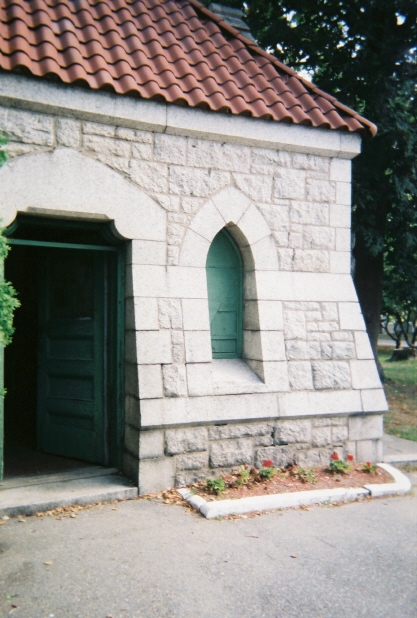







 Friends of Oak Grove Cemetery